
Semrush vs Screaming Frog SEO Spider.
Semrush vs Screaming Frog SEO Spider
Compare Semrush and Screaming Frog SEO Spider by checking pricing, setup, support, owner, proof, reporting, recovery, and launch risk.
Reporting survives. Execution does not.
Semrush adds structure around audits, keyword tracking, and reporting lead; Screaming Frog SEO Spider is safer when lighter setup leaves less cleanup for the lead.
Before choosingDecide whether the team needs one SEO operating stack or a deeper research check. Use Semrush for the operating-stack test; keep Screaming Frog SEO Spider for research depth.
See the SEO work each product covers
These visuals turn the recommendation into product evidence: coverage, work covered, work coverage, and what shows up after purchase.
What work the product replaces
Semrush
- Research
- Brief
- Audit
- Track
- Report
Screaming Frog SEO Spider
- Crawl
- Diagnose
- Export
- Fix
Where each product is strongest
Semrush
Research94%
Audit92%
Reporting95%
Local SEO82%
Tracking92%
Backlinks70%
Screaming Frog SEO Spider
Research18%
Audit98%
Reporting44%
Local SEO10%
Tracking8%
Backlinks8%
What tends to annoy teams later
- Semrush
Semrush becomes expensive quickly when seats, projects, add-ons, and reporting users expand.
- Screaming Frog SEO Spider
Screaming Frog is a technical audit workhorse, but someone still has to own fixes, exports, and QA.
What to verify before setup
Semrush vs Screaming Frog SEO Spider
Semrush should win only when weekly SEO planning across audits, keywords, content updates, and reporting has a named team lead.
Choose Semrush if rank tracking, competitor research, and reporting across more SEO jobs. Keep Screaming Frog SEO Spider in the comparison when SEO research, reporting, and the repeated checks the team actually runs.
Do not choose extra depth until the team can name the work it will actually maintain.
What the team is really choosing
Use Semrush if audits, keyword tracking, and reporting lead.
Use Screaming Frog SEO Spider if lighter setup leaves less cleanup after the first review.
Semrush fails when the team cannot test SEO planning and reporting before buying.
Screaming Frog SEO Spider fails when Semrush is needed for SEO planning and reporting.
Semrush adds structure around audits, keyword tracking, and reporting ownership; Screaming Frog SEO Spider is safer when lighter setup leaves less cleanup for the owner.
Semrush adds structure around audits, keyword tracking, and reporting ownership; Screaming Frog SEO Spider is safer when lighter setup leaves less cleanup for the owner.
Why the reporting work holds
Semrush works best when audits, keyword tracking, and reporting owner.
Why it leads
Semrush is easier to justify once weekly SEO planning across audits, keywords, content updates, and reporting has a clear team lead and a realistic first test.
Failure cases
The team cannot test SEO planning and reporting before buying
the team cannot test SEO planning and reporting before buying.
Screaming Frog SEO Spider handles the narrower task with less cleanup
Screaming Frog SEO Spider handles the narrower task with less cleanup.
Semrush is needed for SEO planning and reporting
Semrush is needed for SEO planning and reporting.
The buyer outgrows the simpler setup after the first test
the buyer outgrows the simpler setup after the first test.
Where reporting stays useful
Semrush holds up once sEO research, reporting, and competitive analysis and one team lead can test the task and limits.
Use Semrush if
The buyer needs audits, keyword tracking, and reporting owner.
Use Screaming Frog SEO Spider if
Simpler setup, budget control, or a narrower task matters more.
Evidence, FAQ, and related decisions
Operational takeaway
What still matters after the product choice
The useful question is who can keep setup, cleanup, reports, and weekly review current.
The better choice is the one the team can operate every week with clear owner, clean reporting, and an exit path if the first process test fails.
Before choosing between Semrush and Screaming Frog SEO Spider, run the same one-week process in both tools: one owner, one report, one handoff, and one export path.
Evidence by tool
Semrush adds structure around audits, keyword tracking, and reporting ownership; Screaming Frog SEO Spider is safer when lighter setup leaves less cleanup for the owner.
SemrushSEO software
- Semrush pays off when reporting breadth is a business function, not a curiosity.
- Why teams use it: Teams usually discover this when best balance of research, audits, competitor review, rank tracking, and content.
- Where it breaks: The process breaks down when backlink depth, technical crawling, content briefs, or reporting is the main job.
- The wrong SEO tool creates reporting work before ranking loss is obvious.
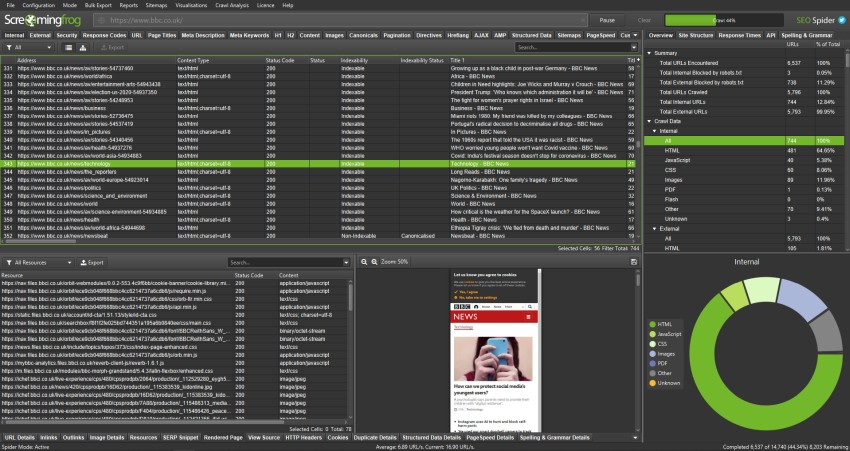
Screaming Frog SEO SpiderSEO software
- The expensive mistake is buying breadth before naming the weekly owner.
- Teams usually discover this when backlink depth, technical crawling, content briefs, or reporting is the main job.
- Where it breaks: The process breaks down when the buyer needs the broader default path.
- The wrong SEO tool creates reporting work before ranking loss is obvious.
Best adoption and job match: Semrush.
Ease of adoptionJob match
SemrushStrong adoption and job matchSemrushEase 87 · Job 100
Easier to adopt, but narrower on the jobScreaming Frog SEO SpiderEase 86 · Job 84
Review basis
Scores use a 0-10 page-specific scale. The weighting starts with process fit, product evidence, observed usage patterns, and buyer consequences before price, support, and commercial tradeoffs.
- Products
- 2
- Workflows
- 20
- Scenarios
- 18
- Fit reviewed
- 20
- Scale
- 0-10, page-specific fit score
- Weighting
- Workflow and buyer fit 40%; product evidence and source-backed capability 35%; price, support, migration, and commercial risk 25%
Buyer support
Buying FAQ
Focused answers for pricing, setup effort, alternatives, and the tradeoffs that usually appear after the first shortlist.
When is Semrush better for Semrush vs Screaming Frog SEO Spider?
Semrush is better when rank tracking, competitor research, and reporting across more SEO jobs is part of the actual work, not just a nice-to-have.
When is Screaming Frog SEO Spider enough?
Screaming Frog SEO Spider is enough.
What should the team check before choosing?
Check the one job the team repeats every week.
What should teams check before consolidating SEO tools?
Check whether the shortlist removes duplicate exports, reporting overlap, and attribution cleanup without adding another dashboard for the SEO lead.
When is Screaming Frog SEO Spider safer than Semrush?
Specialist research can be safer with Screaming Frog SEO Spider when it matters more than suite breadth.
Which SEO tool is cheapest long term?
The cheapest long-term choice is the one whose usage model matches the recurring job.